If you’ve ever flipped through a prescription pamphlet, you’ve probably noticed the long, hard-to-pronounce chemical name listed under the “active ingredient” section—say, metformin hydrochloride for Type 2 diabetes, or simvastatin for high cholesterol. But have you ever stopped to wonder what that active ingredient actually is, why it matters, and how, as an Active Pharmaceutical Ingredient (API) supplier, we play a critical role getting it from lab benches to medicine cabinets? Today, I want to break down exactly what an API is, clear up the common myths that surround it, and explain why this often-overlooked component is the backbone of every safe, effective medication. Active Pharmaceutical Ingredient
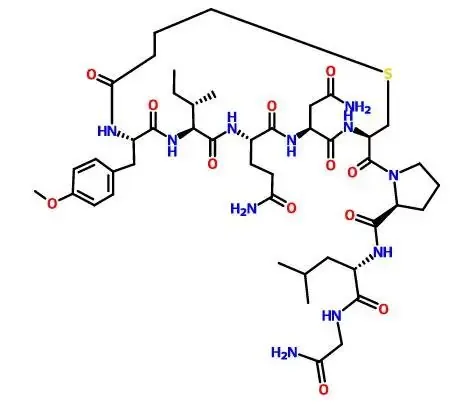
Let’s start with the basic definition, because getting this right is non-negotiable. By the strict scientific and regulatory standard, an API is any component or mixture of components intended to provide medicinal activity or other direct effect in the diagnosis, cure, mitigation, treatment, or prevention of disease in humans or animals. Put simply: APIs are the part of a pill, injection, topical cream, or inhaler that does the actual work. The rest of the product—the filler, binder, coating, flavoring, or preservative? That’s the excipient, and it doesn’t do anything to treat your condition—it just helps the API get into your system evenly, stay stable on the shelf, or make it easier to swallow. That distinction isn’t just a technicality; it’s the foundation of how we regulate and manufacture medicines globally.
Let me give a relatable example to drive this home. If you pick up a bottle of over-the-counter ibuprofen for a headache, the API is ibuprofen itself—its job is to block the pain and inflammation signals in your body. The tablet’s white powder that makes it easy to swallow, the tiny coating that prevents it from dissolving too quickly in your stomach, and the coloring that makes it easy to identify? Those are all excipients, no medical action there. Without pure, high-quality ibuprofen API, that pill would be nothing more than a fancy sugar tablet. That’s why our team at the API supplier I’m proud to be part of doesn’t just make chemicals—we make the core of every medication that millions of people rely on daily.
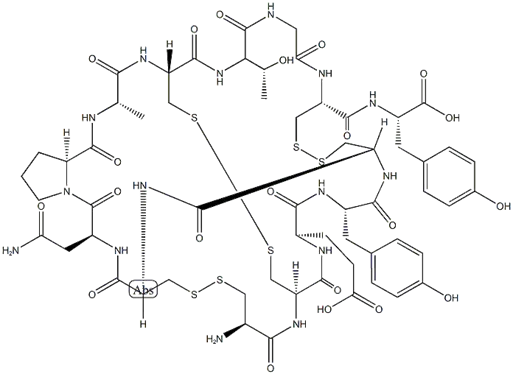
Now, APIs come in all shapes and forms, and that diversity is one of the things that makes our work so complex and rewarding. Some APIs are small, simple chemical compounds, like aspirin, which was first derived from willow bark but is now synthesized in controlled lab facilities. Others are far more complex: biologic APIs, like monoclonal antibodies used for cancer treatment or insulin for diabetes, which are made from living cells instead of pure chemical reactions. These biologic APIs have huge advantages—they’re very specific to targets in the body, which means fewer side effects for patients—but they’re also much harder to manufacture, purify, and regulate than small-molecule APIs.
A common misconception I run into, both with new partners in the pharmaceutical industry and even with some patients, is that APIs are just “raw chemicals.” That couldn’t be further from the truth. The same way you wouldn’t use unregulated flour and sugar to bake a cake for a hospital, we can’t use untested, impure substances to make APIs. Every step of API manufacturing is governed by strict regulatory frameworks—from the U.S. FDA’s Current Good Manufacturing Practices (cGMP) to the EU’s GMP guidelines, and equivalent rules in every major pharmaceutical market around the world. We test every batch of API for purity, potency, safety, and consistency, because even a tiny impurity can have serious consequences for patients. For example, if an API intended for an injection has a harmful byproduct, that could cause an allergic reaction, infection, or even long-term harm. That’s why our quality control team spends more than half their time testing every stage of production, from raw material receipt to final batch release.
Another thing people often ask me is: how do APIs get from an idea in a lab to a finished medicine? The process is long, expensive, and heavily regulated, and it starts long before we even see a formula for an API. First, a pharmaceutical company (the one that makes the finished pill, which we call a “drug product”) will work with researchers to identify a new molecule or biologic that targets a specific disease. That can take years of preclinical testing, where the API is tested in cells and animals to prove it’s safe and effective. Once that’s done, the drug company will work with an API supplier like us to scale up the production of that API from a small lab batch to thousands or even millions of kilograms, enough to supply the entire world’s needs for the medication.
Scaling up API production is one of the biggest challenges in our industry. A chemist can make a few grams of an API in a small lab flask with perfect yield and purity, but reproducing that same reaction in a 10,000-liter industrial reactor is a completely different story. We have to control every variable: temperature, pressure, pH levels, the rate at which we add raw materials, even the humidity in our manufacturing facilities. One small mistake during scaling can lead to lower purity, more impurities, or even a failed batch. That’s why we invest so much in process development and training for our team—our chemists and engineers have to be experts in both the science of API synthesis and the logistics of large-scale, consistent production.
Once we’ve produced an API, we have to purify it and test it rigorously before it can be sold to a drug manufacturer. Purification is critical because APIs often have byproducts or leftover raw materials from the manufacturing process, and even trace amounts of these can be harmful. For small-molecule APIs, that might involve crystallization, filtration, or chromatography to separate the pure API from impurities. For biologic APIs, purification is even more complex, because we have to remove all the host cells, proteins, and other materials used to grow the biologic, while keeping the API’s structure intact. We then perform hundreds of tests on each batch: we measure how much active ingredient is present (potency), check for any impurities that might be above regulatory limits, test the API’s stability (so it doesn’t break down before the drug product is made), and confirm it’s safe for use in humans. Only when we pass all these tests do we issue a certificate of analysis, which is required before the drug company can use our API to make their finished medicine.
The importance of API quality became even more clear to me a few years ago, when our team had to address a potential issue with a batch of a common generic API used in antibiotics. One of our routine tests found a trace impurity that was just under the regulatory limit—but instead of releasing the batch and moving on, we immediately notified the FDA and our customer, and worked to identify the source of the impurity, even though it was well below the level that would have caused harm. That’s the kind of responsibility we take seriously as an API supplier: our job isn’t just to make a product, it’s to protect patient safety. Even small deviations from quality standards can have big consequences, so transparency and rigorous testing are non-negotiable for us.
Now, let’s talk about the current landscape of the API industry, because it’s changing faster than ever before. In recent decades, a lot of API manufacturing moved to regions with lower labor costs, but in the last 10 to 15 years, there’s been a global push to bring API production closer to home, for two main reasons: supply chain resilience and regulatory oversight. The COVID-19 pandemic highlighted just how vulnerable global supply chains can be—when factories shut down or shipping was disrupted, many drug companies couldn’t get enough APIs to make critical medications, from pain relievers to antibiotics. That’s why governments around the world are investing in domestic API manufacturing, and partnering with suppliers like us to build more reliable, transparent supply chains.
At the same time, there’s a growing demand for more personalized medicines, which means APIs that are tailored to individual patients’ needs, or APIs for rare diseases (called orphan drugs) that have small patient populations but are still critical for those who rely on them. That’s changed our business model, too—we used to focus on large-volume APIs for common medications, but now we work with smaller biotech companies to develop and manufacture APIs for novel therapies, even when the volume is low. That requires even more flexibility and expertise, because orphan drug APIs often have very specific production requirements, and we have to navigate unique regulatory pathways to get them approved.
Another big trend in API manufacturing is sustainability. The pharmaceutical industry has a responsibility to reduce its environmental impact, and as an API supplier, we’re committed to that. API production can use a lot of energy and water, and generate waste, so we’ve invested in green chemistry processes that reduce the amount of raw materials we use, recycle solvents, and cut down on energy consumption. For example, we’ve recently switched to a new synthesis process for one of our top-selling APIs that reduces water usage by 30% and cuts waste by 40%, while actually improving purity and yield. That’s not just good for the planet—it’s also good for our customers, because it makes API production more efficient and reliable.
I know that when most people think about medications, they think about the brand name on the box or the doctor who prescribed it. They don’t think about the API supplier behind the scenes, working in a well-regulated facility, testing every batch, and making sure the core of their medication is safe and effective. But that’s exactly why our work matters. Without pure, well-manufactured APIs, there would be no medications. There would be no way to treat diabetes, no way to manage pain, no way to fight infections, no way to treat cancer. That’s a responsibility I don’t take lightly, and it’s what makes going to work every day worth it.
If you’re a pharmaceutical manufacturer looking for a reliable, quality-focused API supplier, I’d encourage you to reach out to our team to discuss your needs. Whether you’re working on a generic drug, a novel biologic, an orphan medication, or something in between, we have the expertise, regulatory experience, and commitment to quality to support your project. We work closely with every customer, from small biotechs to large multinational drug companies, to understand their specific requirements, whether that’s scaling up production, developing a custom API, or ensuring compliance with global regulatory standards.
At the end of the day, being an API supplier is about more than selling a chemical product. It’s about being a partner in improving patient outcomes, contributing to global health, and upholding the highest standards of safety and quality in every batch we make. If you’re ready to discuss your API needs, don’t hesitate to get in touch with our team to start a conversation about how we can support your work.
Ophthalmic Agents References
- U.S. Food and Drug Administration. (2024). “Active Pharmaceutical Ingredients (APIs).” FDA.gov.
- International Council for Harmonisation of Technical Requirements for Pharmaceuticals for Human Use. (2000). “Q7 Good Manufacturing Practice Guide for Active Pharmaceutical Ingredients.” ICH.org.
- World Health Organization. (2021). “Quality Assurance of Active Pharmaceutical Ingredients.” WHO.int.
- European Medicines Agency. (2023). “Active Pharmaceutical Ingredients (APIs).” EMA.europa.eu.
HK Neopharm Limited
HK Neopharm Limited is one of the most professional active pharmaceutical ingredient manufacturers and suppliers in China, also supports customized service. Welcome to buy high quality active pharmaceutical ingredient in stock here and get quotation from our factory. For price consultation, contact us.
Address: Room W Unit 6086/f Metro Loft 38kwai Hei St Kwai Chung, Hong Kong
E-mail: sales@hkneopharm.com
WebSite: https://www.hkneopharm.com/
