If you’re in the construction, plumbing, or irrigation industry, you’ve almost certainly interacted with u-PVC fittings — even if you didn’t stop to name them. As a u-PVC fittings supplier, I’ve spent the last 12 years helping contractors, developers, and hobbyists pick the right parts for every job, and I’ve learned that the biggest mistake people make is buying generic fittings without understanding their specific use cases. Not all u-PVC is the same, and neither are the fittings that connect it. In this post, I’ll break down the most common types of u-PVC fittings, how they work, and when to use each one, drawn from real-world projects I’ve supported over the years. U-PVC Fittings
First, let’s get on the same page about what u-PVC is for anyone new here. Unplasticized Polyvinyl Chloride, or u-PVC, is a rigid, durable plastic that resists corrosion, chemicals, and sunlight far better than metal pipe. That’s why it’s the go-to material for water supply lines, drainage systems, and even some industrial piping. The fittings are designed to connect u-PVC pipe sections, change direction, adjust pipe size, or end a run entirely. Each type of fitting has a specific shape and connection method, and mixing them up can lead to leaks, clogs, or failed systems. Let’s start with the most basic: coupling fittings.
Couplings are the workhorses of u-PVC piping, and they come in two main flavors: slip couplings and threaded couplings. Slip couplings are the ones most people picture when they think of u-PVC fittings. They’re simple, straight tubes with a socket on both ends, and they work by solvent-welding two pipe sections together. Solvent welding is a process where you apply a special cement to the inside of the coupling and the outside of the pipe, which melts the plastic slightly so they fuse into one solid, leak-proof joint. I’ve used slip couplings so many times on residential plumbing jobs, like connecting two 10-foot lengths of pipe for a main water line. They’re cheap, easy to install, and perfect for straight runs where you don’t need to change anything else along the pipe. The only downside is that you have to cut the pipe to an exact length — if you mess up the measurement, you either have to re-cut or use a different fitting.
Then there are threaded couplings, which have male or female threads on one or both ends instead of a socket for solvent welding. These are for when you need a connection that can be taken apart later, like between a u-PVC pipe and a metal fixture, such as a faucet or a water heater. I always warn customers that threaded couplings require Teflon tape or pipe thread compound to prevent leaks, since threads don’t create a permanent fusion like solvent welding. I once had a customer who tried to skip the Teflon tape on a threaded coupling connecting to a garden hose bib, and within a week, he had a leak that soaked his backyard. That’s a small mistake that causes a lot of headaches, so I make sure to mention that every time I sell threaded fittings.
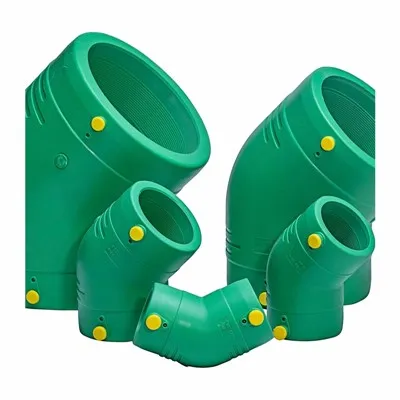
Next up, elbow fittings, which are used to change the direction of the pipe. There are two main angles you’ll see: 90-degree elbows and 45-degree elbows. 90-degree elbows are the most common, used when you need to turn a pipe at a right angle, like going from a horizontal main line to a vertical line going up a wall for a bathroom sink or a sprinkler head. 45-degree elbows are for more gradual turns, like if you need to adjust a line around a small obstacle, such as a foundation wall or a tree root. I always tell contractors to use 45-degree elbows instead of two 90-degree elbows when possible, because multiple sharp turns can create turbulence in the water flow and lead to pressure loss over long runs. That’s a small detail that makes a big difference for irrigation systems or multi-story plumbing where consistent water pressure is important.
Elbows also come in different types based on how they connect. There are slip x slip elbows (solvent weld on both ends), slip x threaded, and even long-radius elbows. Long-radius elbows have a wider curve than standard 90-degree elbows, which further reduces pressure loss. I recently used a long-radius elbow on a commercial irrigation system for a shopping center parking lot, because the tight turns of a standard elbow would have caused enough pressure drop to make the sprinklers at the far end of the lot not spray high enough. It cost a little more, but the client ended up saving money on water and maintenance because the system worked efficiently.
Then there are tee fittings, which are shaped like the letter T and used when you need to create a branch in a pipe. These are essential for plumbing systems, where you take a main water line and run a separate line to a toilet, sink, or outdoor faucet. Like elbows, tees come in different angles — straight tees (90-degree branch) and sometimes angled tees for special applications. They also come in slip x slip x slip, slip x slip x threaded, and reducing tee versions. Reducing tees are when the branch opening is a smaller size than the main line. For example, if you have a 2-inch main water line, but you only need a 1/2-inch line going to a bathroom sink, a reducing tee lets you connect the smaller pipe to the main without needing an extra adapter. I’ve found that reducing tees cut down on installation time and reduce the number of potential leak points, so they’re one of my top recommendations for residential plumbing jobs.
I should also mention cross fittings, which are like tees but have four openings arranged in a plus sign. These are less common, but they’re used when you need two branches off a single pipe section, like in a large irrigation system or a commercial plumbing layout. I’ve only used cross fittings a handful of times in my career, but when I do, they’re a lifesaver — instead of having to add multiple tees and couplings to create two branches, one cross fitting does the job in one piece, making the system sturdier.
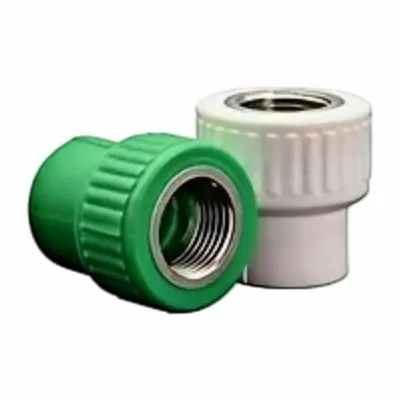
Now let’s talk about adapters, which are the most versatile (and sometimes confusing) type of u-PVC fitting. Adapters are used to connect u-PVC pipe or fittings to other types of piping, like copper, CPVC, steel, or even cast iron. There are several common types: female adapters, male adapters, and transition couplings. Female adapters have a u-PVC socket on one end and female threads on the other, perfect for connecting u-PVC to a metal fixture, like a water heater. Male adapters have a u-PVC socket on one end and male threads on the other, great for connecting a u-PVC line to a copper pipe using a threaded adapter. Transition couplings, on the other hand, have a u-PVC socket on one end and a socket for CPVC or copper on the other, used for connecting different types of plastic piping. I once had a customer who was remodeling an old house and needed to connect new u-PVC water lines to existing cast iron drain lines. A standard adapter didn’t work, so I pointed him to a special transition coupling that matched the outside diameter of u-PVC to the inside diameter of cast iron, and that fixed his problem. Adapters are easy to mix up because they come in so many different sizes and thread types, so I always recommend customers bring a sample of the pipe or fixture they’re connecting if they’re not sure which adapter to get.
Another common type is plug and cap fittings. Plugs are used to close the end of a u-PVC pipe that’s not connected to anything else, like when you’re testing a new system and need to cap off a temporary line, or when you’re leaving a pipe stubbed out in a wall for a future fixture. Caps are similar, but they’re designed to cover the end of a pipe that’s already installed, like a drain line that’s been cut during a remodel. Both plugs and caps come in slip and threaded versions, and they’re pretty simple, but I’ve seen people make the mistake of using a regular piece of u-PVC pipe instead of a plug or cap — that leads to an open end that can get debris or dirt inside the pipe, which can cause clogs later. It’s a small part, but it’s important to get it right.
Last but not least, there are reducing couplings and reducing bushings. Reducing couplings are similar to standard slip couplings, but they have different sizes on each end, so you can connect two pipes of different diameters without using an adapter. For example, if you have a 2-inch pipe and a 1 1/2-inch pipe, a reducing coupling lets you fuse them together in one step, instead of using two separate couplings. Reducing bushings go a step further: they fit inside a larger socket to create a smaller opening, so you can connect a smaller pipe to a larger socket. For example, if you have a 2-inch tee, but you need to connect a 1/2-inch line, a reducing bushing fits inside the tee’s socket, and the small end takes the 1/2-inch pipe. I use reducing bushings all the time when I have an existing fitting of one size and need to attach a smaller pipe, because it avoids extra parts and reduces the number of joints that could leak.
Now, let’s talk about a few key things to remember when working with u-PVC fittings, because even the right fitting won’t work if it’s used incorrectly. First, always match the fitting’s schedule to your pipe. Schedule 40 is the most common for residential plumbing and irrigation, while Schedule 80 is thicker and used for industrial applications or areas with higher pressure. Using Schedule 80 fittings on Schedule 40 pipe isn’t recommended, because the thicker fitting won’t fit properly and can lead to leaks. Second, always use the right solvent cement. There’s different cement for pressure lines (like water supply) and non-pressure lines (like drainage), and using the wrong cement can lead to joints that fail. I always tell customers to ask for help if they’re not sure which cement to use — it’s better to get it right the first time than to deal with a leak later. Third, make sure to clean and prime the pipe and fitting before applying cement. Wiping away dirt or grease with a cloth, and applying primer to the inside of the socket and outside of the pipe, helps the cement fuse properly, creating a stronger joint that lasts longer.
As a u-PVC fittings supplier, I’ve built my business on helping people avoid these common mistakes. Over the years, I’ve worked with small residential plumbers, large construction companies, landscaping contractors, and even hobbyists working on home projects, and one thing I’ve learned is that most issues with u-PVC piping don’t come from bad materials — they come from choosing the wrong fitting or using it incorrectly. That’s why I always take the time to walk through a project with a customer, ask about their specific needs, and recommend the right parts instead of just selling them the cheapest option.
If you’re working on a project and you’re not sure which u-PVC fittings you need, or if you have questions about schedules, solvent cement, or installation, don’t hesitate to reach out to me for a consultation. I can help you figure out the right parts for your job, answer any questions you have, and make sure your piping system is durable, leak-free, and works exactly as you need it to. Whether you’re a small contractor looking for bulk orders or a homeowner working on a weekend project, I’m here to help you get the job done right.
PPR Fittings References:
- The Plastic Pipe and Fittings Association. (2020). u-PVC Piping Systems: Design and Installation Guide.
- American National Standards Institute. (2018). ANSI/ASME A112.6.3 — Pressure-Rated Thermoplastic Pipe Fittings.
- National Association of Plumbing, Heating and Cooling Contractors. (2021). Residential Plumbing Best Practices for u-PVC Systems.
- Irrigation Association. (2019). Commercial Irrigation System Design and Installation Standards.
Qingdao Polyfusion Machinery Co., Ltd.
As one of the most professional U-PVC fittings manufacturers and suppliers in China, we have world-leading production equipment and strong manufacturing capabilities. Please feel free to buy bulk high quality U-PVC fittings from our factory.
Address: Chengyang Industry Zone, Chengyang, Qingdao, Shandong, China
E-mail: export01@qdpolyfusion.com
WebSite: https://www.polyfusionfittings.com/
