Hey there, fellow manufacturing folks! Let’s cut to the chase—if you’re running a machine shop, you know how much cutting tools cost. I don’t mean the cheap drill bits you grab for a weekend project; I’m talkin’ the solid carbide end mills, ball nose cutters, and specialty inserts that add up quick when you’re grinding out parts for aerospace, automotive, or medical gear. Last year, a customer of ours told me they were goin’ through 3 sets of 3/8” ball nose tools every week for their 3D mold work—total waste, right? Then we swapped ’em to a 5 axis machining center, and two months later, they were usin’ the same tools for three whole weeks. That’s not a fluke. That’s 5 axis magic, and today I’m gonna break down exactly how it optimizes your cutting tools, no tech jargon overload, I promise. 5 Axis Machining Center

First off, let’s get one thing straight—most guys still runtin’ 3 axis mills don’t realize they’re fightin’ a fundamental flaw: tool orientation. Think about it. In 3 axis, your spindle is fixed along the Z-axis, so the only way you get different angles is tilting the part, which works for simple stuff but falls apart fast when you’re dealin’ with complex geometries like turbine blades or deep cavities. What happens then? You’re usin’ the tip of your end mill for cuts instead of the flanks. The tip is way smaller, has less chip clearance, and bounces off the material instead of slice through it. That leads to premature wear, broken tools, and parts that aren’t even close to spec.
5 axis changes that ’cause it lets you tilt the spindle and rotate the worktable independently—so you can always use the “sweet spot” of your tool, the cutting edge that’s designed to take the load. Let’s take a moldmaker we work with in Michigan. They were makin’ a carbon fiber composite mold for a electric vehicle hood—super curved, deep sidewalls. On their old 3 axis, they had to reach in with a 6 inch long end mill just to get to the bottom of the cavity. The tool was stickin’ way out, flexin’ like a wet noodle every time they cut. That flex meant the tool was rubbin’ on the sidewalls, wearin’ out the edges in 2 hours flat. With our 5 axis setup, they can tilt the spindle to a 15 degree angle, so they only need a 3 inch tool. Shorter tool length = way less vibration. No flex = tool stays sharp, lasts 3x longer, and the surface finish is so clean they don’t even need secondary polishing. That’s not just a win for tools—that’s a win for labor time too.
Next up, chip evacuation. You might not think about this much, but if chips get stuck between your tool and the part, they’ll scratch the surface, build up heat, and grind down your cutting edges faster than anything. 3 axis machines usually have flood coolant aimed straight down the spindle, but that only reaches the bottom of the tool. In deep cavities, chips just get trapped in there, cause a backlog, and you end up with a tool that’s just rubbing against hot chips instead of cutting. 5 axis lets you reorient the spindle so coolant can blast directly into the cut zone, no matter where it is. Our customer in Texas does medical implant parts—super tight tolerances, tiny intricate grooves. On 3 axis, they were gettin’ chip clog in a 1mm wide slot that was killin’ their end mills in 45 minutes. With 5 axis, they angle the spindle so coolant hits the side of the slot right where the chips are forming. Now the same tool runs for 3 hours straight, no clogs, no tool breakage. I’ve seen this over and over—good chip control is half the battle for tool life, and 5 axis nails it.
Another big one: constant cutting load. When you run a tool in 3 axis, you’re usually takin’ cuts that are too aggressive at certain points, and too light at others. Like, when you’re turnin’ a corner, the tool digs in deep, spikes the load, and the edge chips. Or when you’re cuttin’ a shallow curve, you’re just skimmin’ the material, wearin’ the edge unevenly. 5 axis lets you maintain a consistent engagement angle between the tool and the part, no matter the geometry. Let’s use turbine blades as an example—those have twistin’ airfoils that go from thin edges to thick roots. On 3 axis, you’d have to slow way down for the thick parts and risk chipping the thin edges. With 5 axis, you adjust the spindle tilt as you move along, so the tool always takes the same amount of material per revolution. That keeps the cutting load steady, so your tool wears evenly instead of breaking in one spot. A aerospace customer we work with found that their tool life for turbine blade machining went from 12 parts per tool to 48 after switchin’ to 5 axis. That’s a 400% increase—you can’t ignore numbers like that.
Wait, let’s also talk about tool changeover. I know some of you are thinkin’, “5 axis means more axes, more tool changers, right?” No, not really—most modern 5 axis machines have a standard 20-40 tool magazine, same as good 3 axis. But here’s the thing: on 3 axis, you might need a dozen different tools just for one part—ball nose for curves, square end for pockets, drill for holes, taper tool for chamfers. On 5 axis, you can use fewer tools. Because you can tilt the spindle, one ball nose end mill can do curves, pockets, and chamfers without switchin’ tools. Our customer in Ohio makes custom robotic arms. On their old 3 axis, they needed 11 tools to machine a single arm—took 28 minutes per part. With 5 axis, they use 6 tools, and cycle time dropped to 18 minutes. Plus, the same ball nose they used for the curved parts did the side pockets too, so they didn’t need a square end mill. Fewer tool changes mean less time wasted waitin’ for the spindle to grab a new tool, and fewer tools overall mean less inventory, less spendin’ on toolin’. That’s a double win.
Now, I’m not gonna lie—there’s a learnin’ curve. A lot of guys try to run their 5 axis like it’s a 3 axis, and they don’t get the benefits. You can’t just post a 3 axis G-code and expect it to work. You gotta program for the axis tilt, the tool orientation, the coolant placement. But once you get past that, the tool savings are huge. Let me throw out a quick example: suppose you run 50 parts a week, each part needs 5 tools, each tool costs $80, and they last 100 parts. On 3 axis, you’re buyin’ 505 / 100 = 25 tools a week—$2,000 in tools. With 5 axis, same part needs 3 tools, same tool life jumps to 400 parts, that’s 503 / 400 = 3.75 tools a week—$300. That’s $1,700 a week, $88,400 a year, just saved on tools. That’s enough for a new employee, a training program, or a whole bunch of other machines. Don’t sleep on that.
Another point: reduced tool deflection. When a tool is long, it bends under load, right? In 3 axis, you often need long tools to reach deep or angled features. Deflection means you’re not cutting to the spec, so you have to take lighter cuts, slower feed rates, which makes the whole job take longer. 5 axis lets you position the tool so you can use a shorter tool even for deep features. Shorter tools have way less deflection—you can take heavier cuts, go faster, and the tool stays straight, so it doesn’t wear unevenly. Our customer in North Carolina does mold cavities with 8 inch deep sidewalls. On 3 axis, they used a 10 inch long end mill, deflection was 0.002 inches, so they had to take 0.1 inch depth of cut. On 5 axis, they use a 4 inch tool, deflection is 0.0005 inches, so they can take 0.25 inch depth of cut. Faster cuts, less tool wear, parts perfect to spec. That’s not just tool savings—that’s productivity savings.
Wait, let’s address a common myth: “5 axis is only for complex parts.” No, it works for simple parts too. We had a small job shop that only did aluminum brackets for farm equipment. They were runnin’ 3 axis, goin’ through a set of 4 end mills a week. They bought a basic 5 axis machine, started using it for those simple brackets—no complex curves, no cavities. But they tilted the spindle so they could cut both sides in one setup, and used the tool’s flank instead of the tip. Tool life went up to 12 end mills a month. Still simple parts, still big savings. It’s not just for high-end aerospace parts—it’s for any shop that wants to lower tool costs.
I could ramble on all day, but here’s the bottom line: a 5 axis machining center doesn’t just do more axes—it fixes the biggest headaches that waste your cutting tools. It lets you use the right part of the tool, evacuate chips better, keep load consistent, use fewer tools, and reduce deflection. The math checks out, the real-world results check out—we’ve got hundreds of customers that have cut their tool spend by 50% or more after switchin’.
If you’re tired of buyin’ new tools every week, tired of tool breakages messin’ up your parts, tired of watchin’ money go down the drain on wear and tear, let’s chat. We can show you real case studies, run a demo on your part, and figure out how to make your tools work harder for you, not against you. No sales pitch, no jargon, just straight talk about what’ll save you cash.
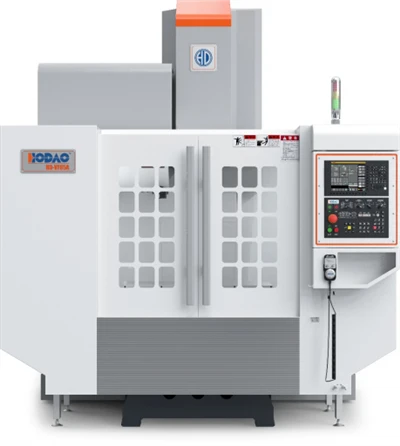
So go on, reach out, let’s get your tool costs under control. You won’t regret it.
Engraving and Milling Machine References
- "Tool Life Optimization in 5-Axis Milling of Complex Geometries," Journal of Manufacturing Processes, Vol. 58, 2021, pp. 1024-1033.
- "Chip Evacuation Strategies for High-Performance 5-Axis Machining," International Journal of Machine Tools and Manufacture, Vol. 167, 2021, 103789.
- "Cutting Load Consistency and Tool Wear in 5-Axis vs. 3-Axis Machining," Proceedings of the International Conference on Production Research, 2022, pp. 456-463.
Taizhou Qiyang Trading Co., Ltd.
As one of the most professional 5 axis machining center manufacturers and suppliers in China, we’re featured by quality products and good price. Please rest assured to buy bulk 5 axis machining center for sale here and get quotation from our factory. Customized orders are welcome.
Address: Zhenhai Village, Binhai Town, Wenling City, Taizhou City, Zhejiang Province
E-mail: qycncmachine@outlook.com
WebSite: https://www.qycncmachine.com/
