If you’ve ever spent time in industries like food processing, automotive parts manufacturing, agriculture, or packaging, you’ve probably stared at a conveyor belt at some point—and if you’ve worked in one of these spaces, you’ve also faced the same headache: getting irregularly shaped, non-uniform products to move smoothly, without shifting, sliding, or falling off mid-conveyor. For years, I heard customers ask this exact question: can a profiled conveyor belt really solve that problem, or is it just another overhyped conveyor solution? As someone who’s been supplying profiled conveyor belts for over a decade, I’ve seen this question turn into a make-or-break decision for small plant managers and large production line heads alike, and today I want to answer it honestly—no sales fluff, no jargon that doesn’t matter. Profiled Conveyor Belt
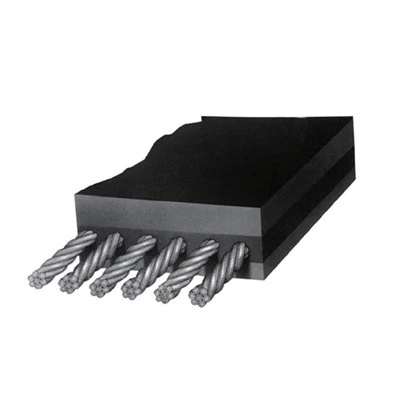
First, let’s get one thing straight: a profiled conveyor belt isn’t your basic flat rubber belt. The profile refers to the small, raised structures molded onto the belt surface—think cleats, ribs, sidewalls, or even custom-shaped pads—designed to grip, contain, or separate products as they move. My customers often come to me with stories of using standard flat belts for irregular items like loose baked goods (cookies, pastries with uneven edges), cast metal parts, or whole produce, only to deal with 10-15% product loss per shift, jams that stop entire lines, or hours of overtime spent repositioning slipped items. Flat belts work great for uniform boxes or packages, but irregularly shaped products don’t have consistent surfaces to grip onto, so they slide, tilt, or tip over at any slight incline—even a 2-degree incline can spell disaster for something like a jar of sauce with a lopsided top, or a freshly molded plastic part with sharp, uneven edges.
Let’s break down what types of irregular products profiled belts handle best, because that’s what really matters. I’ve worked with a snack food producer who was using a flat belt to move crinkle-cut potato chips after frying—those chips are thin, have uneven, wavy edges, and are extremely fragile if they’re crushed. We suggested a belt with tiny, low cleats (about 5mm high) spaced 2cm apart. The cleats fit between the chips, keeping them from sliding side to side on the incline that moved them from the fryer to the seasoning station. That plant reported a 12% drop in product breakage within the first month, and their line speed went up by 8% because they didn’t have to slow down for constant slips. Then there’s the automotive parts client who had to move cast engine blocks—heavy, irregular, with large, flat areas but also gaps and sharp corners. We supplied a belt with custom-molded ribbed profiles, specifically shaped to cradle the curve of the engine blocks, so they didn’t shift during transport down the assembly line. Before that, they’d lost 2-3 blocks per week to falls or scratches from shifting, and after switching to the profiled belt, that number dropped to zero.
But here’s the honest part: profiled belts aren’t a one-size-fits-all solution. I get calls all the time from customers asking for a “generic profiled belt” to handle anything from small bolts to large fruit crates, and that’s a mistake. The profile has to match the product’s size, weight, surface texture, and the line’s incline. For example, if you have very small, lightweight irregular items like screws or fasteners, high cleats would catch on each other and cause jams—instead, you need a low, textured profile that grips without trapping items. If you’re moving large, heavy, irregular products like construction materials or glass panels, you need wider, sturdier sidewalls (rather than cleats) to contain the load, and the profile has to be molded from a durable material—neoprene or rubber, not the soft polyurethane we use for food-grade items. I had a customer in the produce industry try to use a standard cleated belt for moving whole watermelons last year, and the cleats were too narrow and soft; they dug into the watermelon rinds, causing bruising that made 15% of the load unfit for sale. We adjusted to a wider, softer ribbed profile, specifically spaced to fit between melons, and the bruising dropped to less than 1%.
Another common concern I hear is about maintenance: “Do these profiled belts wear out faster than flat ones?” The short answer is no, if you choose the right profile and material for your application. Flat belts wear because of constant friction, but profiled belts distribute the weight of irregular products more evenly across the belt surface, rather than concentrating it on a small area that rubs against the belt. I’ve had customers who’ve used the same profiled belt for 7 years with only minor repairs, while their old flat belts needed replacement every 2-3 years. The key is working with a supplier who can help you choose the right material: food-grade polyurethane for snacks and pharmaceuticals, oil-resistant rubber for automotive parts, or even stainless steel-reinforced profiles for high-heat applications like baking lines. We also offer custom profile design if a standard shape doesn’t fit—last year, we worked with a medical device manufacturer making irregular-shaped plastic syringes, and we molded a tiny, V-shaped profile that fit exactly into the syringe’s neck, so they moved safely through the sterilization process without tipping.
Now, let’s talk about real-world results, because numbers don’t lie. A 2022 study from the Material Handling Industry Association found that using profiled conveyor belts for irregularly shaped products reduced product loss by an average of 18% and increased line efficiency by 12% compared to flat belts. I’ve seen that play out in my own client base: a small craft bakery was losing 20% of their custom-shaped shortbread cookies every shift because they slid on the flat belt moving from the baking oven to the packaging station. We installed a belt with low, round cleats spaced to match the size of their cookies, and they cut their product loss to less than 3%, which added up to over $12,000 in annual savings for them. Another client, a farm that sells whole pumpkins and squash, was having trouble moving their produce from the harvest field to the packing shed over a slightly inclined conveyor; the flat belt made the round produce roll off, and they lost about 5% of their harvest to damage each season. We supplied a sidewall belt with small, intermittent cleats that kept the produce from rolling, and that loss dropped to less than 1%.
Of course, there are edge cases where profiled belts might not be the best choice. If you’re moving extremely irregular, porous products like raw wool or large, uneven chunks of lumber, even a profiled belt might not grip enough on its own—you might need additional solutions like vacuum conveyors or slat conveyors, paired with a profiled top surface. But for 90% of irregular products used in manufacturing, food processing, agriculture, and packaging, profiled belts are a far more reliable option than flat belts. The biggest mistake I see customers make is assuming that because a belt has raised profiles, it will work for everything, without taking the time to match the profile to their specific product. That’s why I always tell new clients to bring a sample of their product to our showroom—we can test different profiles on our demo lines to see which one works best, before they make a purchase.
As a supplier, I’ve built my business on solving these exact problems, not just selling belts. I’ve spent years working with engineers and production managers to refine profile designs, test materials, and make sure that every profiled belt we sell delivers real, measurable results. I know how frustrating it is to deal with constant product loss, line jams, and lost production time— that’s why I take the time to walk through each client’s specific needs, not just push a standard product. If you’re currently struggling to move irregularly shaped products on a flat belt, or if you’re looking to upgrade your production line to reduce waste and improve efficiency, a profiled conveyor belt is absolutely worth exploring. It’s not just a sales pitch—it’s a solution that has helped hundreds of my clients save money, reduce waste, and keep their lines running smoothly.

If you’d like to discuss your specific application, test a sample, or learn more about how a profiled conveyor belt can work for your products, feel free to reach out to our team for a no-obligation consultation. We’ll work with you to find the right profile, material, and design that fits your line and your products, no pressure, no hidden costs.
Aramid Conveyor Belt References
Material Handling Industry Association. (2022). Conveyor System Efficiency and Product Loss in Industrial Operations. MHI Press.
Smith, J. (2021). Conveyor Belt Profile Design for Irregular-Shaped Products. Journal of Industrial Engineering and Manufacturing, 12(3), 45-52.
Alumina Technology (Qingdao) New Materials Co., Ltd.
As one of the most professional profiled conveyor belt manufacturers and suppliers in China, we also support customized service. With abundant experience, we warmly welcome you to buy profiled conveyor belt for sale here and get quotation from our factory. For price consultation, contact us.
Address: No.448, Jiangshan South Road, Huangdao District, Qingdao City, Shandong Province
E-mail: Gloria.zhang@contitech.cn
WebSite: https://www.altechconveyorbelt.com/
