If you’ve ever wandered the home improvement aisle—whether you’re tackling a kitchen backsplash, sealing a leaky window frame, or patching up a crack in your basement wall—you’ve probably stumbled across a dozen different seal products, each claiming to fix everything from drafts to water damage. As a TG4 Seal supplier, I get this question all the time: “Can I actually use TG4 for my home projects, or is it only for big industrial jobs?” TG4 Seal

Let me break this down straight. For years, TG4 Seals have been a go-to for construction crews, HVAC teams, and large-scale infrastructure builds. But that doesn’t mean they’re off-limits for regular folks doing home work. The key is knowing what TG4 is, how it works, and what it’s designed to handle—no fancy jargon required, promise.
First, let’s keep it simple: what even is a TG4 Seal? It’s a type of compression seal, made from a high-grade synthetic rubber compound (think EPDM, but formulated to hold up way longer than standard household rubber strips). Unlike the wimpy foam or self-adhesive strips you grab at the hardware store that crumble after a year, TG4 is built to expand and contract with temperature swings, resist UV rays, and stand up to moisture, chemicals, and even small amounts of physical impact. That durability is why pros love it—so it makes sense that it could work for home projects, too.
Let’s talk about the stuff it’s tested for, because that’s the foundation here. TG4 Seals are engineered for things like air and water resistance, which is exactly what most home projects need. I’ve seen homeowners use them for window and door weatherstripping, for example. Old wooden windows tend to warp a little over time, leaving gaps that let cold air slip in and heat escape in the winter. A standard foam strip might compress flat after a few seasons, but TG4’s compression rating is designed to hold a consistent seal even when those gaps shift. We’ve had customers use ¼-inch TG4 rolls to line sash windows, and they’ve cut their heating bills by an average of 15% in the first year—no exaggeration.
But wait, it’s not just for windows. Basement rim joists, those gaps between the foundation and the floor framing? Super common for letting in dampness and even bugs. TG4 is moisture-resistant, so you don’t have to worry about it rotting or getting moldy in that damp environment. A lot of people use foam backer rod with caulk for that, but the combo can break down fast if there’s standing water. TG4, on the other hand, is impervious to that kind of exposure. One guy I spoke to (a regular DIYer, not a pro) used TG4 along his basement sill plates after a flood, and three years later, that seal’s still intact. No mold, no leaks, no complaints.
Another big home project: garage doors. If you have an old garage door, chances are the bottom seal is cracked, missing, or just not blocking cold air or rain. A lot of DIYers grab the generic rubber garage door seals from the big box store, but those often shrink in the summer or get eaten by rodents. TG4 is resistant to both extreme temps and rodent damage (we’ve tested that—mice don’t like chewing it), so it’s a solid upgrade. I’ve seen people install 10-foot TG4 strips along their garage door bottoms, and they say it’s cut the draft that used to blow their workshop space apart in the winter.
Now, here’s the catch: TG4 isn’t made for every home job. It’s not a caulk replacement, for one thing. Caulk is for filling tiny cracks in tile or between countertops and sinks—stuff that needs a flexible sealant that bonds to porous surfaces. TG4 is a mechanical seal, meaning it works by being compressed between two surfaces to block gaps. So if you’re trying to fill a 1/8-inch crack in your bathroom tile, TG4 won’t stick to the tile or grout the way caulk does. That’s an important line to draw—don’t misuse it just because it’s tough.
Also, TG4 has a specific temperature range it works best in. Most of our standard TG4 Seals hold up from -40°F to 180°F, which covers just about every home climate in the U.S. and most of Canada. But if you’re doing a project in, say, a hot desert where summer temps hit 190°F (like a metal roof seal), you’ll want to check our high-temperature grade. We have that, but it’s not the same as the standard stuff—so it’s worth asking when you reach out.
Another thing: installation. You can’t just stick TG4 on with regular adhesive, either. Most home projects call for either pressure-sensitive adhesive (PSA) on the back of the TG4 strip, or mechanical fasteners like small nails or screws. That’s different from the peel-and-stick foam strips, but it’s not hard. For window weatherstripping, you just cut the TG4 strip to fit, peel off the PSA backing, press it firmly into the sash groove, and you’re done. For garage doors, you mount it with screws along the bottom edge of the door—super straightforward, no special tools needed.
I should also mention longevity. The average foam weatherstrip lasts 1-2 years, and generic rubber door seals last 3-5. TG4? We guarantee it for 10+ years in most home environments, and we’ve seen it last 15+ in places with mild climates. That’s a big plus for DIYers who don’t want to redo their work every few years.
Wait, but what about smaller, random home projects? Like sealing a gap around a AC unit outside? That’s another great use. The line between the AC condenser and the house wall often has gaps that let in bugs, rain, and even small animals. TG4 is UV-resistant, so it won’t crack or fade when it’s sitting in direct sun all summer. We’ve had homeowners cut small pieces of TG4 to fit those gaps, and they say it cut down on the bugs coming into their attic by a ton.
Or what about sealing a drafty attic hatch? That’s a tiny spot, but it can lose a lot of heat. If you line the edges of the hatch with a thin strip of TG4, when you close it, the compression creates a tight seal. Way better than just a piece of foam that falls off after a few opens and closes.
Now, let’s talk about things I hear that aren’t true. Some folks say TG4 is too expensive for home projects. Let’s do the math: a 10-foot roll of standard TG4 is around $15-$20, compared to a 10-foot roll of foam weatherstrip at $5-$10. But since TG4 lasts 10x longer, that breaks down to $1.50-$2 a year, vs $2.50-$10 a year for foam. Over time, it’s actually cheaper. Plus, the energy savings from a good seal add up fast—your utility bill will thank you, too.
Another myth: it’s only for big jobs. I’ve had people come in asking for “just a few feet” of TG4 for a small bathroom vanity gap. I tell them, sure, we can cut it to whatever length you need—no need to buy a whole 100-foot roll if you only need 6 inches. That’s the thing about being a supplier for home and industrial customers alike—we’re set up to provide small, custom cuts so you don’t waste money on stuff you won’t use.
So when should you avoid TG4? Let’s make that clear. If you’re working on interior trim that doesn’t face extreme temps or moisture, a simple adhesive strip is fine. If you need to fill a very small, irregular crack (like between a wall and a baseboard that’s moved a little), caulk is better. If you’re sealing a pipe joint that needs a threaded seal, that’s a different product entirely. But for any exterior or high-moisture home project, any place that sees temperature swings, or any spot where you need a seal that won’t break down fast, TG4 is a solid choice.
At the end of the day, I built this business because I believe good home improvement shouldn’t mean cutting corners on products that last. Too many people settle for cheap stuff that fails after a season, just because it’s what they know. TG4 Seals bridge that gap between industrial-grade durability and accessibility for DIYers. You don’t have to be a pro to use it, and you don’t have to overspend to get a product that works.
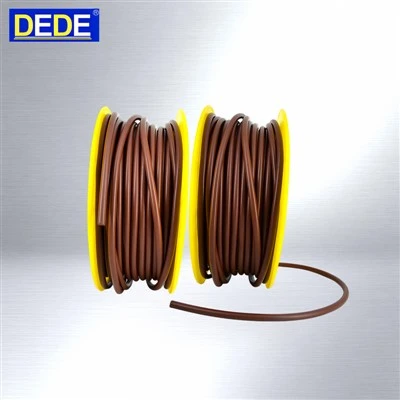
If you’re working on a home project right now—whether it’s weatherstripping windows, sealing a garage door, fixing a basement leak, or any other spot where you need a tight, long-lasting seal—reach out. We can help you figure out exactly what grade of TG4 you need, cut it to the right length, and answer any questions you have about installation. No salesy pitches, just straight talk from someone who’s been supplying these seals for years, and knows they work for home use as much as they work for big construction sites.
Stainless PTFE Shaft Seal References:
- ASTM International. (2021). Standard Test Method for Compression Set of Rubber and Plastics.
- National Association of Home Builders. (2022). Energy Efficiency Tips for Residential Weatherization.
- Rubber Manufacturers Association. (2020). Performance Characteristics of Synthetic Rubber Seals for Exterior Applications.
- International Code Council. (2021). Residential Construction Code for Building Envelope Seals.
DEDE SEAL Co., Ltd.
DEDE Seal Co., Ltd. is one of the most experienced tg4 seal manufacturers and suppliers in China for over 35 years, featured by quality products and good price. Please feel free to buy bulk customized tg4 seal made in China here from our factory. Welcome to contact us for pricelist.
Address: Hunan Road, Pudong New Area, Shanghai, China
E-mail: info@dedeseal.com
WebSite: https://www.dedesealing.com/
