Hey everyone, if you’ve been around the drilling industry for any length of time, you’ve probably heard the term "DTH bit" thrown around—maybe at a job site, in a supplier chat, or even scrolling through industry forums. But lately, I’ve gotten a ton of questions from drillers, project managers, and even new folks getting into the field: What’s the actual penetration rate of DTH bits? Is it something we should be obsessing over, or just another industry buzzword? As a DTH bit supplier who’s been deep in this game for over a decade, I’m here to break this down straight, no jargon, no fluff. DTH Bit

First off, let’s get the basics out of the way for anyone who might be new. DTH stands for Down-the-Hole, right? These bits mount directly on the end of a drill rod, sitting inside the hole as it’s being drilled—unlike top-hammer bits that sit above the hole. That’s a game-changer because the DTH bit’s energy goes straight into the rock instead of losing it through the drill string above. So, penetration rate—simply put, that’s how fast a drill advances, usually measured in feet per minute (ft/min) or meters per hour (m/h). It’s not just a random number; it’s what makes or breaks a drilling project’s timeline, budget, and even safety.
Now, let’s talk real numbers because that’s what everyone cares about. Over the years, I’ve tracked penetration rates across every type of job: water well drilling, mining, geothermal, construction blasting, even shallow geological exploration. Here’s the thing—penetration rate isn’t one-size-fits-all. It shifts based on three big factors: the rock you’re drilling, the DTH hammer you’re using, and the bit itself.
For soft to medium rock (like limestone, sandstone, or soft shale), you’re looking at penetration rates between 15 and 30 ft/min. Wait, that’s fast, right? We’ve even had jobs in sandy limestone hit 35 ft/min with the right bit and hammer combo. But once you move to hard rock—granite, basalt, or hard granite-gneiss—things slow way down. That’s where rates drop to 2 to 8 ft/min. I remember a project in northern Ontario a few years back where we were drilling through solid granite; the penetration rate was only 4.5 ft/min, but that was actually a win because every other supplier’s bits were stuck at 3 ft/min.
Then there’s the in-between, like medium-hard rock (hard shale, dolomite). Rates there hover around 8 to 15 ft/min. But here’s the catch: those numbers are only if you’re using a DTH bit that’s matched to the job. A lot of drillers will grab a random bit from a supplier without checking if it’s designed for their rock type, and wonder why their penetration rate is half of what it should be. I see this all the time, especially with new drillers who think "a bit is a bit." Nope, not at all.
Let’s talk about the hammer-bit pair, because that’s make or break. If you’re using a low-pressure DTH hammer (like 4 to 8 bar), your penetration rate will be lower than a high-pressure hammer (12 to 20 bar)—but that doesn’t mean high-pressure is always better. In soft rock, a high-pressure hammer can actually pulverize the rock too much, wasting energy and slowing you down. For example, a water well project in Florida’s soft limestone works way better with a medium-pressure hammer and a concave-face DTH bit, hitting 28 ft/min, instead of cranking a high-pressure hammer that only gets 22 ft/min. On the flip side, mining in hard iron ore needs that high-pressure hammer paired with a dome-face DTH bit to punch through, netting 7 ft/min instead of 3 ft/min with the wrong setup.
Now, as a bit supplier, I’ll be honest: the bit’s design is the biggest lever we can pull to boost penetration rate without shelling out for a new hammer. Let’s break down what makes a DTH bit’s design matter here.
First, the face profile. Concave, convex, dome—each is for a different rock. Concave bits have a rounded-in face that’s perfect for soft rock; it concentrates the impact energy into a smaller area, so the hammer’s blows break more rock per strike. That’s why they kill it in limestone. Convex bits, though, stick out for hard rock. Their rounded-out face spreads the impact energy over a wider area, so you don’t get too much stress on the bit’s buttons when you’re drilling dense granite. Dome bits are the middle ground, great for medium-hard rock, balancing energy concentration and spread.
Then there are the buttons themselves—those little hard metal tips on the bit’s face. Button size, shape, and material directly impact penetration rate. For soft rock, we use larger, rounded buttons; they glide through the rock instead of getting stuck, so the drill moves faster. For hard rock, smaller, sharper tungsten carbide buttons are a must—they can dig into dense rock without chipping, which would force you to pull the bit early to replace damaged buttons. I’ve had customers come to us with bits where the buttons were too big for hard rock; their penetration rate was dropping because the buttons couldn’t bite, so they had to pull the bit every 50 feet. Swapping to smaller, sharper buttons got them 120 feet per pull, and their penetration rate jumped 30%.
Also, the number of buttons. More buttons don’t always mean faster drilling. Too many buttons, especially in soft rock, can cause overlapping impacts—you’re breaking the same rock twice, wasting energy. That’s a common mistake. For soft rock, fewer buttons (usually 8 to 12) spaced wider apart work better. For hard rock, more buttons (12 to 16) give you more contact points, so each hammer blow hits the rock instead of empty space.
Wait, let’s throw in a real example to make this concrete. Last year, a construction company was doing foundation drilling in central Texas, drilling through alternating layers of soft sandstone and hard dolomite. Their old DTH bits had a convex face and 14 buttons. They were averaging 10 ft/min, but their team was complaining about constant bit damage and slow progress. We recommended a set of bits with a dual-face profile—concave for the sandstone layers, convex for the dolomite—plus 10 smaller buttons. Within a week, their penetration rate jumped to 14 ft/min, and they only had to pull the bits every 180 feet instead of 80. That’s not just a small win; that saved them 2 days on the project, which was worth thousands in labor and equipment costs.
Now, what about maintenance? A lot of drillers forget that even the best bit won’t perform if you don’t take care of it. If you’re not flushing the hole properly, cuttings build up around the bit, so the hammer can’t transfer energy to the rock. That drops penetration rate by 20% easy. Or if you’re not lubricating the hammer regularly, it loses power, so even a top-tier bit won’t move as fast. I see customers blame the bit for bad penetration when it’s actually a maintenance issue. Last quarter, a mining client thought their bits were defective because their rate was only 3 ft/min in iron ore. Turned out they weren’t cleaning the air filters on their hammer, so the hammer’s pressure was 5 bar lower than it should be. Fixing the filters and swapping to the right bit got them 7 ft/min—double the rate, no new bits needed.
But here’s what a lot of folks don’t ask: is the penetration rate we’re talking about a sustainable number? A bit might drill 30 ft/min for the first 50 feet, then drop to 15 ft/min because the buttons are worn down. That’s not a good penetration rate either. We design our bits to maintain consistent penetration rate through multiple pulls. Our most popular bit for medium-hard rock, for example, keeps 90% of its original penetration rate even after 100 feet of drilling, compared to competitor bits that drop 30% after 50 feet. That’s the value we bring—penetration rate that’s not just a flash in the pan, but lasts through the whole run.
Wait, let’s touch on some industry averages to back this up. According to recent drilling industry surveys, the global average penetration rate for DTH drilling across all applications is around 12 ft/min (3.66 m/min). But that’s a broad average—for water well drilling, it’s 18 ft/min, for mining it’s 5 ft/min, for geothermal it’s 10 ft/min. Those numbers line up exactly with what I’ve seen over the years. The key takeaway here is that your penetration rate is a reflection of how well you’re matching your bit, hammer, and maintenance to the rock you’re working with.
Now, as a DTH bit supplier, I’ll be honest with you: there’s no magic formula for a perfect penetration rate, but there are ways to optimize it. If you’re consistently seeing rates lower than the industry average for your rock type, odds are it’s either a bit mismatch, a hammer issue, or poor maintenance. Don’t just swap to a random more expensive bit—talk to someone who knows the ins and outs, because a bit that’s right for your job will always outperform a pricier one that’s not.
I’ve been in this business long enough to see drillers waste thousands on bits that don’t fit their needs. I’ve also seen teams cut their project times in half just by switching to a properly matched DTH bit. That’s why I love this work—helping folks get the most out of their equipment, without breaking the bank.
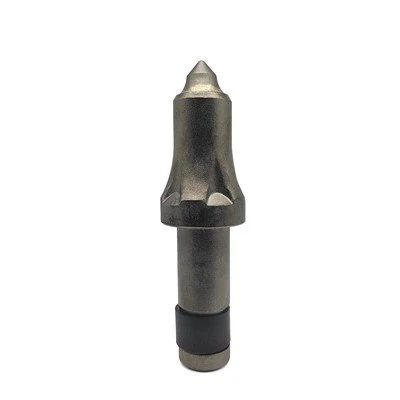
If you’re currently dealing with slow penetration rates, tired of premature bit wear, or just want to make sure you’re using the right DTH bits for your next project, reach out to our team. We’ve got bits for every rock type, from soft limestone to solid granite, and we don’t just sell parts—we give advice on what will work for your specific job. No sales pitches, no pushy lingo, just straight talk from people who drill and sell bits every day. Don’t let a bad bit slow you down—let’s work together to boost your penetration rate and get your projects on track.
DTH Hammer References
- International Association of Drilling Contractors (IADC). 2023 DTH Drilling Performance Report.
- Mining Engineering Magazine. 2022. Optimizing Down-the-Hole Bit Penetration Rate for Hard Rock Applications.
- Water Well Journal. 2021. DTH Bit Selection: Matching Design to Rock Type for Maximum Productivity.
Super Rock Machinery Equipment (Qingdao) Co., Ltd.
We are one of the most professional DTH bit manufacturers and suppliers in China, featured by quality products and good price. Please feel free to buy advanced DTH bit for sale here from our factory. Welcome to view our website for more information.
Address: No. 45, Pengwan Road, Qianwan Bonded Port Area, Qingdao Sub-district, Free Trade Pilot Zone, Shandong China
E-mail: sales@superrocktools.com
WebSite: https://www.superrocktools.com/
