Hey folks, if you’ve ever messed around with a Constant Force Spring (that’s CFS for short, we use it a lot around here) you might’ve noticed something—they don’t look like your basic coil spring. Like, those coiled metal springs you find in a retractable tape measure or a old toy car? They’re all bulky, wrapped tight in loops, but a CFS is this thin, flat strip of metal that’s wound super evenly, right? But the part that most people overlook, especially if you’re buying these for a project or a product, is the surface finish. That’s actually way more important than you’d think, and it’s something we get questions about every single week here at the spring shop. Constant Force Spring
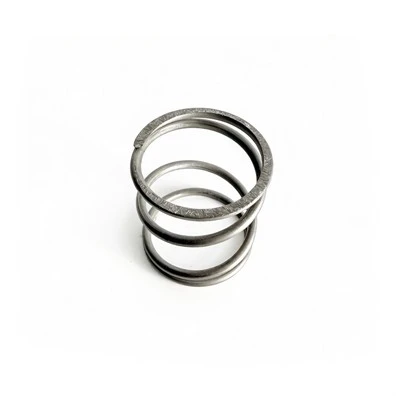
Let me break this down without all the engineering jargon. First, what even is a surface finish for a CFS? It’s basically the texture of the metal strip after we process it—smooth, rough, matte, shiny, all that stuff. But it’s not just how it looks; it affects how the spring works, how long it lasts, even what it’s used for. A lot of new buyers come in like, “Just make it smooth, duh” but it’s way more nuanced.
First off, let’s talk about where CFS surface finishes come from. Our base material is almost always high-carbon steel, stainless steel, or sometimes phosphor bronze if someone needs corrosion resistance. The base metal is rolled into thin sheets, but rolling creates a surface texture—we call that “mill finish.” Mill finish is kind of like a slightly bumpy, dull surface, not super smooth. But we can’t just use that raw mill finish for most CFS applications. Why? If you leave that rough texture, when the spring winds and unwinds (which it does thousands, sometimes millions of times, depending on the job), those tiny bumps will rub against each other. That causes friction, which wears the spring out way faster. Also, if you’re using the spring in something medical, like a catheter retraction mechanism, that rough texture can catch on tiny parts or even harbor bacteria. Yeah, that’s a big one for medical devices.
So what do we do instead? The most common surface finish we offer here is a ground finish. Wait, not like grinding it up into dust—we run the metal strip through super precise grinding rollers to smooth out the mill finish until it’s almost mirror-smooth. We’re talking a surface roughness of like 0.2 to 0.8 micrometers, if you care about the numbers. That’s the kind of finish you want for most everyday CFS uses: retractable badge reels, window balance springs, even garage door cables (wait, no, garage doors use bigger springs, but you get the idea). The smooth surface cuts down friction, so the spring winds and unwinds evenly, no sticking, no weird drag. We’ve had a client who makes retractable dog leashes come in last month—they were using a lower-grade CFS with a rough finish and the spring would stick half the time, dogs getting away, people returning the leashes. Switched to our ground finish CFS, and they’ve had zero complaints in 6 months. That’s the kind of win we live for here.
But wait, ground finish isn’t the only option. Some applications need a different finish. Let’s say you’re making a CFS for a consumer electronics device, like a laptop hinge that uses a constant force spring to keep the screen open. You don’t want it to scratch the inside of the laptop’s aluminum body, right? Even ground finish might be too abrasive there. So we offer a polished finish next. Polished is even smoother than ground—we buff the surface until it’s almost like a mirror, roughness under 0.1 micrometers. That’s great for when the spring is rubbing against another part that’s delicate. We did a project last year for a big laptop brand—their old CFS was scratching the inner chassis, so they switched to our polished finish, and that fixed the problem. No more returns from scratch marks, which saved them a ton of money.
Then there’s matte finish. Wait, matte is different from the dull mill finish. Matte finish is a controlled, slightly textured surface, not the rough mill kind. We do that when we don’t want the spring to be shiny, or when we need a little bit of grip. For example, if you’re making a CFS for a counterweight in a projection screen, a shiny finish might reflect light and be distracting on a movie screen. Matte finish eliminates that glare, which is exactly what a big home theater company asked for last quarter. Also, matte finish can help with adhesive bonding if you’re attaching something to the spring, like a label or a sensor—glue sticks way better to a slightly textured matte surface than a super smooth polished one. That’s a trick we’ve picked up over the years, testing different finishes for different use cases.
Wait, let’s not skip over corrosion resistance, because that’s a huge factor for surface finish too. A lot of clients need CFS for outdoor use, like in solar trackers that adjust to follow the sun, or marine equipment that’s exposed to saltwater. For those, we use stainless steel base material, and we offer a passivated finish. Passivation is a process where we treat the surface to remove free iron, making it way less likely to rust. The surface finish for passivated stainless is a smooth, slightly dull matte—we don’t polish it here because the polish would weaken the corrosion resistance. We’ve had a client making marine navigation equipment swear by our passivated CFS; they told us the springs lasted 3 times longer than the ones they were buying from another supplier. That’s a direct result of the surface finish, not just the metal itself.
Now, let’s get real about what surface finish doesn’t do. A lot of people think a better finish means a better spring, but that’s not always true. If you need a CFS that’s going to be under extreme tension for millions of cycles (like in a hard drive, where the spring moves constantly), a super polished finish might be too smooth—wait, no, scratch that, actually for hard drives we use a very smooth finish, but the point is, it’s not just about smoothness. For example, if your application is a one-time use spring, like in a medical syringe retractor, the surface finish might be less important than if it’s a spring that moves every day for 10 years. We’ve had to explain that to so many buyers: don’t pay for a polished finish if you don’t need it. A ground finish is cheaper, works just fine for most projects, and saves you money. That’s something we always make sure to tell folks, no pressure, just honest advice.
Another thing that affects surface finish: coating. Sometimes clients need to add a coating to the CFS for extra protection, like zinc plating, tin plating, or PTFE coating. Each coating changes the surface finish a little. For example, PTFE coating (that’s Teflon for anyone who doesn’t know) gives a super low-friction, smooth surface—great for applications where the spring is moving against another part constantly, because it reduces wear even more. We did a project with a company that makes automated industrial doors; their CFS was wearing out too fast because of daily use, so we added a thin PTFE coating to our standard ground finish CFS, and the spring’s lifespan doubled. That’s another example of how surface finish, when paired with the right coating, makes a huge difference.
Wait, let’s address a common myth here: some people think that a rougher surface is stronger. No, that’s not right. The surface finish has almost nothing to do with the strength of the spring—strength comes from the metal’s thickness, the amount of tension it’s designed for, the type of metal. A rough surface can actually make the spring weaker over time because it creates more stress points when the spring bends and unwinds. That’s why we never recommend a mill finish for high-cycle applications—those stress points will cause the spring to break early. We see that all the time with first-time buyers who try to save money by using a cheap, unprocessed spring, and it breaks within a few months. We’re here to help them avoid that, not just sell them a spring.
Now, let’s talk about how we test surface finish here at the shop. We don’t just guess—we use a profilometer, which is basically a machine that measures the texture of the metal surface. We check every batch of springs before they leave our warehouse, so we know the finish is consistent. A lot of smaller spring companies skip that step, which is why you might get a spring that’s way rougher than expected. We take pride in that consistency—you order 100 CFS, you get 100 with the same smooth (or matte, or polished) finish, no surprises.
If you’re reading this, chances are you’re either designing a product with a constant force spring, or you’re tired of dealing with springs that don’t work right. Maybe you’ve had springs that stick, scratch other parts, wear out too fast, or even break unexpectedly. The surface finish is probably the culprit here, and it’s a part of the spring that’s way easier to customize than you might think.
Here’s the thing: we don’t do one-size-fits-all here. Every CFS application is different, so we work with you to pick the right surface finish. If you’re not sure, just send us a note about what you’re using the spring for—retractable tools, medical devices, outdoor equipment, whatever—and we’ll tell you which finish works best, and even give you a sample to test. No sales pitch, no pressure, just real advice from people who’ve been making constant force springs for years.
So if you’re ready to stop dealing with unreliable springs, or you just want to ask more questions about surface finishes, reach out to our team. We’re here to help you get the right spring for your project, no matter how big or small. Don’t waste time with springs that don’t fit your needs—let’s chat, and we’ll make sure your CFS has the perfect surface finish to work exactly how you want it to.
Wave Spring References:
- Introduction to Surface Finish of Metal Components, Society of Manufacturing Engineers, 2021.
- Constant Force Spring Design and Application Handbook, Spring Manufacturers Institute, 2022.
- Corrosion Resistance of Coated Metal Springs, Journal of Materials Engineering and Performance, Volume 30, Issue 4, 2021.
Wenzhou Huajie Precision Spring Co., Ltd.
As one of the most professional constant force spring manufacturers and suppliers in China, our products have good reputation in the market. Please rest assured to wholesale bulk constant force spring in stock here and get pricelist from our factory. We also accept customized orders.
Address: No.6 Chuangsan Road, Lingang Industrial Zone, Yueqing, Wenzhou City, Zhejiang Province, China.
E-mail: ZGhuajieTH@163.com
WebSite: https://www.huajiespring.com/
