As a high-temperature cable supplier who’s worked closely with event production teams, stage lighting technicians, and venue engineers for over a decade, I’ve heard this question more times than I can count: Can high-temperature cables be used in stage lighting? At first glance, it makes sense to be skeptical—stage spaces are built for drama, not extreme heat, right? But after years of troubleshooting, testing, and partnering with productions from Broadway’s immersive hits to outdoor music festivals, I can tell you: the answer is a resounding yes. And for many lighting setups, high-temperature cables aren’t just a good option—they’re the safest, most reliable choice. High-temperature Cables
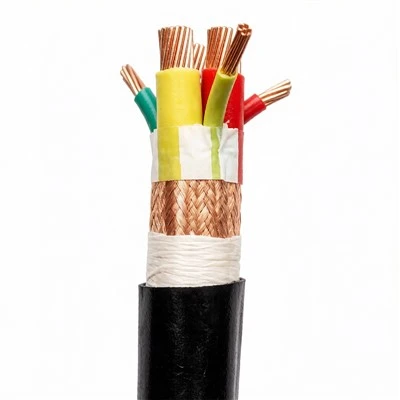
Let’s start with the basics to clear up any confusion. Stage lighting relies on high-intensity luminaires—think 2kW moving heads, 5kW followspots, and even larger units for arenas. These fixtures generate a lot of heat, both from the bulb and the ballasts that regulate power. Standard low-temperature cables, which most electricians use for general wiring, are rated for continuous use at temperatures as low as -40°F and as high as 194°F (90°C). But here’s the catch: a 5kW stage light can hit fixture surface temperatures of 300°F (149°C) during operation. When you add in the heat from adjacent fixtures, tight rigging spaces where air can’t circulate, and long run times (some shows run 12+ hours a day), standard cables quickly exceed their temperature limits. That’s where high-temperature cables come in: these are engineered to withstand continuous use at 221°F (105°C) up to a whopping 500°F (260°C), depending on the type.
I remember a pivotal moment early in my career that made me a believer. Back in 2012, we worked with a regional theater company prepping a production of Miss Saigon that used 12 new 4kW followspots. The electrician on the job, a seasoned guy named Jake, initially bought standard 12/3 SO cable for the rig. Within three days of tech week, three cables had melted insulation where they ran close to the followspot housings. We rushed in with our high-temperature silicone-insulated cables, which are designed to resist thermal degradation, abrasion, and even small flame exposure. After swapping them out, we didn’t have a single insulation failure for the entire run, which stretched 8 weeks with 6 shows a week. Jake told me later that the standard cables had been a “time bomb” waiting to go off—and that’s when I realized how little the industry knew about cable temperature ratings specific to stage lighting.
Now, let’s break down why high-temperature cables solve the most common pain points in stage lighting:
First, heat-related failures are the #1 cause of lighting rig outages. Imagine a sold-out show where the lead actor is mid-monologue, and a key spotlight cuts out because a cable burned through its insulation, causing a short circuit. That’s not just a technical glitch—it’s a financial hit (live event producers can lose tens of thousands for every minute of downtime) and a reputation hit. High-temperature cables eliminate this risk by maintaining their structural integrity even when exposed to sustained heat. Unlike PVC-insulated standard cables, which harden and crack at high temps, our high-temperature cables stay flexible, so they don’t fray when rigged tightly around trusses or fixture housings.
Second, stage lighting setups have unique physical constraints. Rigs are often packed into tight spaces—truss sections might have 10+ fixtures stacked side by side, with cables running between them with no room for air flow. Standard cables can’t dissipate heat in these conditions, leading to internal overheating even if the surface temp seems manageable. High-temperature cables are built to handle “ambient heat buildup” in cramped spaces, which is a huge win for both indoor theater rigs and outdoor festival setups, where sunlight can add another 50-100°F to the surrounding temperature.
Third, safety is non-negotiable in live events. Theatrical and event safety codes (like NEC Article 520 for temporary stage wiring) mandate that cables used near high-heat equipment must be rated for the environment. Using non-compliant standard cables not only violates codes but also puts crews and attendees at risk. High-temperature cables are often flame-retardant and low-smoke, which is critical if a small fault occurs. During a festival setup in 2019, a moving head shorted out, and the nearby high-temperature cable only smoldered slightly before self-extinguishing—something a standard PVC cable would have released toxic smoke and burned rapidly, posing a fire hazard.
But wait—isn’t there a cost difference? I get it, budget is always a concern for production teams. I’ve had clients ask me if the higher upfront cost of high-temperature cables is worth it. My answer is always a resounding “yes” when you factor in the long-term costs of cable failures, repairs, and downtime. A 500-foot spool of standard 12/3 SO cable runs about $150-$200, while the same length of high-temperature silicone cable is $250-$300. But consider this: if you have 10 rigged spots, that’s a $500 difference in upfront cost, versus potential repairs, re-rigging, and lost revenue from a single outage that could run $10,000 or more. Plus, high-temperature cables have a longer operational life—we’ve seen our cables last 5+ years in constant use, compared to 2-3 years for standard cables that degrade in heat.
Of course, it’s not a one-size-fits-all solution. There are different types of high-temperature cables for different stage lighting applications. Silicone-insulated cables are best for direct contact with hot fixture housings, as they’re extremely flexible and heat-resistant. For outdoor festival setups where moisture is also a factor, we offer cross-linked polyethylene (XLPE) high-temperature cables that are waterproof as well as heat-resistant. For low-voltage LED strip lighting, which runs cooler but still benefits from the durability, we have smaller-gauge high-temperature cables that don’t degrade from the minor heat generated by LED drivers. I always work with customers to match the right cable to their specific setup—whether it’s a small theater’s fixed rig or a touring production’s portable stage.
I’ve also seen common mistakes that people make when switching to high-temperature cables. The biggest one is not following proper loading practices. Even high-temperature cables have a maximum ampacity—you can’t run a 5kW light through a 14-gauge cable just because it’s high-temperature. That would cause internal overheating, even if the insulation can handle surface heat. Another mistake is using high-temperature cables in applications where the temperature is low. It’s a waste of budget, but it’s not harmful—our cables are designed to perform well in cold temps too, so they work just as well for outdoor winter festivals as they do for summer Broadway shows.
Looking ahead, the stage lighting industry is moving toward higher-intensity fixtures (like 10kW+ followspots) and more complex rigs, so the need for high-temperature cables will only grow. At our company, we’re constantly testing new materials to make our cables even more durable, lightweight, and cost-effective. Last year, we launched a hybrid high-temperature cable that combines silicone insulation with a reinforced fiber core, which is 30% lighter than traditional silicone cables and holds up to the same heat and abrasion. We worked with a touring concert production to test this new cable on their rigs, and they reported a 25% reduction in cable-related rig issues during a 6-month tour across North America.
So, to circle back to the original question: Can high-temperature cables be used in stage lighting? The answer isn’t just “yes”—it’s that they’re a critical component of safe, reliable, and high-performing stage lighting setups. The old days of grabbing standard cable from a hardware store and crossing your fingers are over. Modern stage rigs demand cables that can handle the unique heat, space, and safety challenges of live events.
If you’re a stage electrician, production manager, or venue engineer looking to upgrade your rig’s cables, I encourage you to reach out. We’ve supplied high-temperature cables to thousands of stage lighting setups, from community theater to major Broadway tours, and we’re ready to help you find the right solution for your needs. We can provide custom lengths, bulk pricing, and technical support to make sure your rig is safe and reliable.
High-temperature Cables Reference 1: National Electrical Code (NEC) Article 520: Cabling, Wiring, and Equipment for Theaters, Assembly Halls, and Similar Locations.
Reference 2: Lighting Equipment Safety Standards (ANSI E1.20): Standard for Stage Lighting Systems.
Reference 3: Thermal Performance of Electrical Cables in High-Heat Applications (2021 Journal of Stage Technology Research).
Anhui Yuantong Cable Co., Ltd.
As one of the most professional high-temperature cables manufacturers and suppliers in China, we offer a wide range of cables with superior quality. Please feel free to wholesale bulk customized high-temperature cables from our factory. Also, pricelist is available.
Address: Yongfeng Industrial Park, Tianchang City, Anhui Province
E-mail: ahytcable@126.com
WebSite: https://www.yuantongcable.net/
