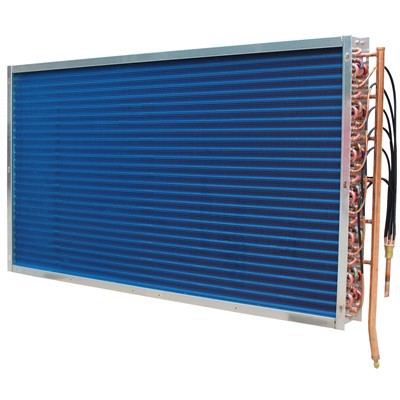
As an evaporator supplier deeply involved in the industry, I’ve witnessed firsthand the critical role these devices play in numerous processes across diverse sectors. Evaporators are essential in applications ranging from chemical and food industries to wastewater treatment and desalination plants. One of the most frequently asked questions I encounter from our clients is about the heat transfer mechanism in an evaporator. Understanding this mechanism is fundamental to optimizing evaporator performance, improving efficiency, and ensuring cost – effective operation. Evaporator
Basics of Heat Transfer in Evaporators
Heat transfer in an evaporator is a complex yet well – defined process that involves the transfer of thermal energy from a heating medium to a liquid, causing it to vaporize. There are three primary modes of heat transfer: conduction, convection, and radiation. In the context of evaporators, conduction and convection are the dominant modes, while radiation typically plays a minor role.
Conduction
Conduction is the transfer of heat through a solid medium. In an evaporator, the heating medium (such as steam) transfers heat to the evaporator wall. For example, in a shell – and – tube evaporator, the steam flows through the shell side. The heat is then conducted through the tube wall. The rate of heat conduction can be described by Fourier’s law, which states that the heat transfer rate (Q) is proportional to the temperature difference (ΔT) across the solid, the cross – sectional area (A) through which the heat is flowing, and inversely proportional to the thickness (L) of the solid. Mathematically, it can be expressed as (Q=-kA\frac{dT}{dx}), where (k) is the thermal conductivity of the material.
The choice of material for the evaporator tubes is crucial. High – thermal – conductivity materials like copper or stainless steel are commonly used. Copper has excellent thermal conductivity, which allows for efficient heat transfer from the steam to the liquid inside the tubes. However, stainless steel is often preferred in corrosive environments due to its better resistance to chemical attack, even though its thermal conductivity is lower than that of copper.
Convection
Convection is the transfer of heat by the movement of a fluid (liquid or gas). Once the heat has been conducted through the tube wall, convection comes into play in the transfer of heat from the tube wall to the liquid inside the tubes. There are two types of convection: natural convection and forced convection.
In natural convection, the fluid movement is caused by density differences resulting from temperature variations. When the liquid near the tube wall is heated, it becomes less dense and rises, while the cooler, denser liquid sinks. This creates a natural circulation pattern, which enhances heat transfer. In an evaporator operating under natural convection conditions, the circulation rate depends on the temperature difference between the tube wall and the bulk liquid, as well as the physical properties of the liquid such as density, viscosity, and specific heat.
Forced convection, on the other hand, involves the use of an external device such as a pump to circulate the liquid. By increasing the flow rate of the liquid, the rate of heat transfer can be significantly enhanced. In forced – circulation evaporators, the liquid is pumped through the tubes at a high velocity. This continuous flow of the liquid ensures a more uniform temperature distribution and reduces the formation of vapor films on the tube walls, which can act as an insulating layer and impede heat transfer.
Evaporation Process and Heat Transfer Efficiency
The evaporation process in an evaporator can be divided into two main stages: pre – heating and evaporation. In the pre – heating stage, the incoming liquid is heated to its boiling point. During this stage, the heat transfer is mainly focused on raising the temperature of the liquid, and the rate of evaporation is relatively low.
Once the liquid reaches its boiling point, the evaporation stage begins. At this point, the heat supplied is used to convert the liquid into vapor. The latent heat of vaporization plays a crucial role in this process. The latent heat is the amount of heat required to change a unit mass of a liquid into vapor at a constant temperature and pressure. For water, the latent heat of vaporization is quite high (approximately 2260 kJ/kg at 100°C and atmospheric pressure). Therefore, a significant amount of heat needs to be transferred to the liquid to achieve a high rate of evaporation.
The heat transfer efficiency in an evaporator is affected by several factors. One of the key factors is the temperature difference between the heating medium and the boiling liquid. A larger temperature difference generally results in a higher rate of heat transfer. However, there are practical limitations. For example, if the temperature difference is too large, it may cause problems such as fouling of the tube walls, which can reduce the heat transfer rate over time.
Fouling is the accumulation of unwanted materials on the heat transfer surfaces. It can be caused by the precipitation of salts, the deposition of organic matter, or the growth of microorganisms. Fouling acts as an additional thermal resistance, reducing the effective heat transfer coefficient. To mitigate fouling, regular cleaning of the evaporator is required, and the operating conditions should be carefully controlled.
Another factor affecting heat transfer efficiency is the flow pattern of the liquid inside the evaporator. Different flow patterns, such as parallel flow, counter – flow, and cross – flow, can have different effects on heat transfer. Counter – flow arrangement, where the heating medium and the liquid flow in opposite directions, is generally more efficient than parallel flow. In counter – flow, the temperature difference between the two fluids remains relatively constant along the length of the heat exchanger, resulting in a higher overall heat transfer rate.
Importance of Understanding Heat Transfer Mechanisms for Our Clients
As an evaporator supplier, I know that understanding the heat transfer mechanism in an evaporator is not just theoretical knowledge; it has practical implications for our clients. By having a good understanding of how heat is transferred in an evaporator, our clients can make informed decisions when it comes to selecting the right type of evaporator for their specific applications.
For example, if a client has a liquid with a high fouling tendency, we can recommend a forced – circulation evaporator, which is better able to handle fouling due to the high liquid velocity. On the other hand, if the client has a relatively clean liquid and a limited budget, a natural – circulation evaporator may be a more suitable option.
Moreover, understanding the heat transfer mechanism helps clients optimize the operating conditions of their evaporators. They can adjust the temperature of the heating medium, the flow rate of the liquid, and other parameters to achieve the highest possible heat transfer efficiency. This not only reduces energy consumption but also extends the lifespan of the evaporator.
Conclusion and Invitation
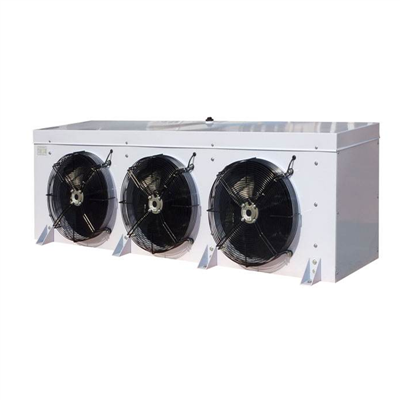
In conclusion, the heat transfer mechanism in an evaporator is a multi – faceted process that combines conduction and convection to efficiently transfer thermal energy and cause evaporation. As an experienced evaporator supplier, we are committed to providing our clients with high – quality evaporators that are designed to maximize heat transfer efficiency. Whether you are in the chemical, food, or wastewater treatment industry, we have the expertise and solutions to meet your specific needs.
Finned Tube If you are interested in learning more about our evaporators or are considering a purchase, we encourage you to reach out to our sales team. We can provide you with detailed product information, technical specifications, and customized solutions based on your requirements. Let’s start a conversation about how our evaporators can improve your processes and enhance your productivity.
References
- Incropera, F. P., & DeWitt, D. P. (2001). Fundamentals of Heat and Mass Transfer. Wiley.
- Kern, D. Q. (1950). Process Heat Transfer. McGraw – Hill.
- Schlünder, E. U. (1983). Heat Exchanger Design Handbook. Hemisphere Publishing.
Xiangshui Derkang Refrigeration Equipment Co., Ltd.
As one of the most professional evaporator manufacturers in China, we’re featured by quality products and low price. If you’re going to buy discount evaporator, welcome to get quotation from our factory. We also accept customized orders.
Address: No. 2, Xiaojian Town Entrepreneurship Park, Xiangshui County
E-mail: 505745223@qq.com
WebSite: https://www.xsderk.com/
